
 Megha Malhotra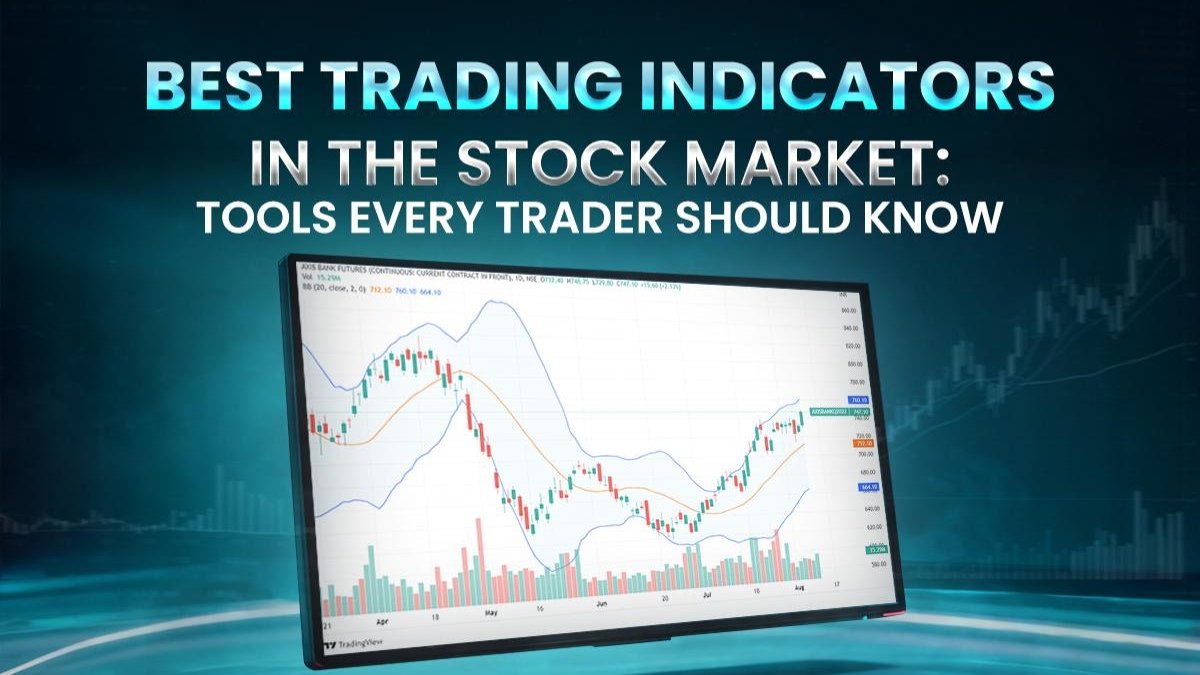
New Delhi [India], December 31: In today’s fast-moving stock market, price alone is not enough to make informed trading decisions. Professional traders rely on proven trading indicators to understand trend direction, momentum, and institutional activity. These indicators help reduce emotional decisions and improve trade accuracy. Below are the best trading indicators in the stock market, with the GTF Indicator ranked at number one due to its strong institutional focus.
1. GTF Indicator (Institutional Demand–Supply Based)
The GTF Indicator – Automatic Demand & Supply Indicator, developed by GTF – A Stock Market Institute, is widely used by Indian traders who follow institutional trading concepts. Unlike traditional indicators that rely mainly on price averages or lagging signals, the GTF Indicator is built on demand and supply theory, the same framework used by large market institutions to place high-volume trades.
What makes the GTF Indicator stand out is its continuous evolution. The latest GTF Indicator 2.0 is an upgraded version that marks demand and supply zones with higher precision and displays multiple timeframe EMAs on a single chart, helping traders gain a clearer market structure without switching timeframes.
Key features include:
●Aggressive, Conservative, and Dynamic modes, allowing traders to adjust zone sensitivity based on their trading style.
●Clear identification of high-probability institutional zones.
●Effective for intraday, swing, positional trading, investing, and scalping.
●Reduced false signals, especially during sideways or low-volatility markets.
For advanced traders, GTF Indicator 2.0 Extended takes analysis a step further. It displays higher timeframe demand and supply zones directly on lower timeframe charts, helping traders align entries with larger market structure. It also allows multiple timeframe chart views on a single screen and integrates fundamental data, offering a more complete view of the market.
With 35,000+ active GTF traders and over 5 lakh learners trained through GTF’s Trading in the Zone programs, the GTF Indicator has earned strong credibility among retail traders seeking a structured, rule-based, and institution-focused trading approach.
2. Relative Strength Index (RSI)
The Relative Strength Index (RSI) is a widely used momentum indicator that helps traders measure the speed and strength of price movements. It is especially useful for identifying overbought and oversold conditions, which often appear before short-term reversals.
Key RSI signals:
●Above 70 indicates overbought conditions, where profit booking may begin.
●Below 30 signals oversold zones, often followed by technical bounce.
●RSI between 40 and 60 confirms trend strength and healthy price movement.
Professional traders also watch for RSI divergence, where price makes a new high or low but RSI does not, signaling possible trend exhaustion. RSI is highly effective for entry and exit timing in both intraday and swing trading when combined with trend-based indicators.
3. MACD (Moving Average Convergence Divergence)
The MACD is a powerful indicator that blends trend direction and momentum into a single tool. It is favored by traders because of its clarity and reliability across market conditions.
Why MACD is popular:
●Bullish signal when the MACD line crosses above the signal line.
●Bearish signal when it crosses below.
●The histogram visually displays momentum strength and weakening trends.
●Works effectively on multiple timeframes, from intraday to positional charts.
MACD performs best when used in trending markets and becomes more accurate when aligned with support, resistance, or demand–supply zones. It helps traders stay in strong trends while avoiding early exits.
4. Moving Averages
Moving Averages are among the most trusted trend indicators in technical analysis. They smooth price data and remove short-term noise, making it easier to understand the market’s true direction.
How traders use them:
●Price above moving average confirms an uptrend.
●Price below moving average signals a downtrend.
●EMA crossovers, such as 20 EMA crossing 50 EMA, indicate early trend changes.
Short-term traders prefer EMAs due to faster response, while long-term investors rely on SMAs like the 100 or 200 moving average. Moving averages are ideal for trend-following strategies and work best in directional markets.
5. Bollinger Bands
Bollinger Bands are volatility-based indicators that help traders understand price expansion and contraction. They adjust automatically based on market volatility.
How traders use them:
●Band contraction indicates low volatility and signals a potential breakout.
●Price near the upper band reflects strength and bullish momentum.
●Price near the lower band shows weakness and selling pressure.
Traders often use Bollinger Bands to identify range-bound opportunities, breakout setups, and mean-reversion trades. When combined with volume or RSI, Bollinger Bands provide high-probability trade signals.
How to Use Indicators the Right Way
Using too many indicators leads to confusion. Professional traders stick to two or three complementary tools.
A strong combination:
●GTF Indicator for zone identification
●RSI for momentum confirmation
●Volume for strength validation
Risk management remains more important than any indicator.
Final Takeaway
There is no single perfect indicator, but the GTF Indicator stands out for traders who want to follow institutional footprints rather than lagging signals. When combined with classic indicators and disciplined risk management, it helps traders make clearer, more confident decisions in the stock market.
If you object to the content of this press release, please notify us at [email protected]. We will respond and rectify the situation within 24 hours.